


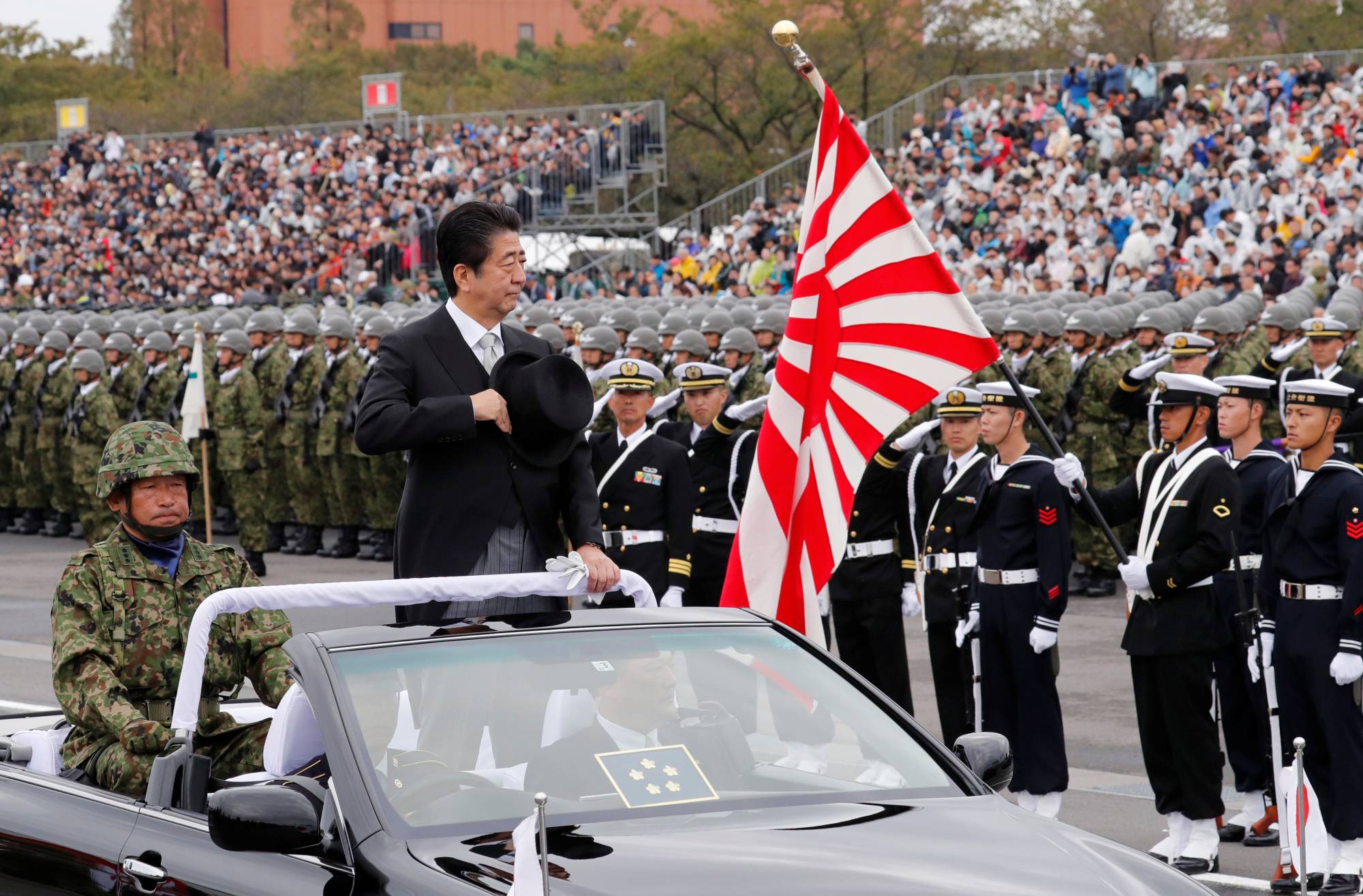
The gusto with which Japan has embraced rearmament has surprised its allies and international partners.
Last month, Prime Minister Fumio Kishida unveiled detailed plans to double defense spending over the next five years, leaving no doubt about the country’s determination to expand its military capabilities to deter China’s expansionist ambitions.
Japan’s new strategic vision represents the culmination of a long-term shift that began under former Prime Minister Shinzo Abe, who was assassinated last July. During Abe’s tenure, which lasted from his return to power in December 2012 until his resignation in September 2020, Japan revamped its military doctrine and significantly increased defense expenditure.
Abe also created a Cabinet-level National Security Council, established the National Security Secretariat to support it, streamlined military procurement by forming the Acquisition, Technology & Logistics Agency, and, last but not least, sought to amend Japan’s pacifist constitution, though in vain.
Taken together, Abe’s policies marked a historic shift in Japan’s defense policy and regional standing. No longer would Japanese security be a matter of wishful thinking, willful blindness and dependence on the United States. Before Abe, if China had attacked a U.S. warship near Japan’s territorial waters, the Japanese military would not have gotten involved. Abe rejected this absurd approach and pushed Japan to assume a central role in the Indo-Pacific. Now, if the U.S. and China were to go to war over Taiwan, Japan could cooperate with the U.S. military. In a role reversal of sorts, the Japanese military is now protecting U.S. ships and planes in the region.
KEYWORDS
In a time of both misinformation and too much information, quality journalism is more crucial than ever.
By subscribing, you can help us get the story right.
With your current subscription plan you can comment on stories. However, before writing your first comment, please create a display name in the Profile section of your subscriber account page.