


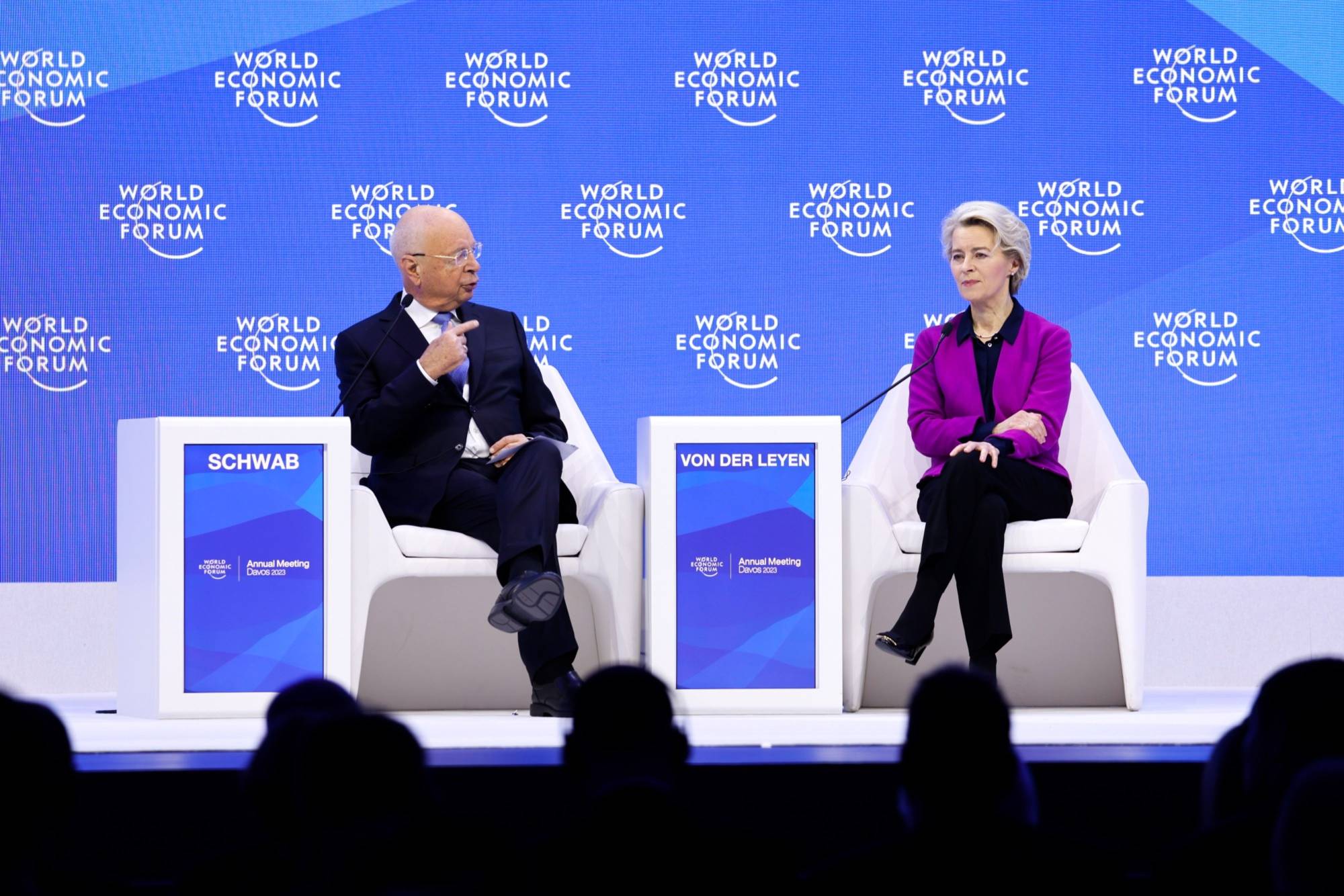
DAVOS, Switzerland – Is globalization coming back to life? That was the big question at the World Economic Forum’s annual meeting in Davos, where WEF founder Klaus Schwab asked whether it is possible to have cooperation in an era of fragmentation.
For the past decade, the steady demise of “Davos Man” — the avatar of global business and cosmopolitanism — was the big story here, owing to the 2008 financial crisis, Brexit, Donald Trump’s election, democratic backsliding around the world, COVID-19 and Russia’s war in Ukraine. All were seen as signs that globalization had gone too far and would be thrown into reverse.
But the mood at this year’s meeting was slightly more optimistic. Despite much concern about conflict and economic strife, the world seems to be doing a little better than global elites expected when they last met in May. The Ukrainians are valiantly resisting the Russian invaders, the West is united, Europe has managed to keep the lights on this winter and some think we might still avoid a recession.
Moreover, beneath these important short-term developments is a more profound shift toward a new form of globalization, albeit one that will be quite different from what preceded it. While the globalization of goods seems to have peaked, services are becoming ever more globalized, owing to the revolution in telework during the pandemic.
There is also an accelerating revolution in energy, driven partly by the war in Ukraine. European Commission President Ursula von der Leyen and German Chancellor Olaf Scholz predict that the widespread adoption of renewables and hydrogen power will be as significant as the Industrial Revolution of the nineteenth century. At the same time, advances in artificial intelligence are opening vast new possibilities, while also creating tensions over microchips and renewed fears about joblessness and rogue robots.
KEYWORDS
In a time of both misinformation and too much information, quality journalism is more crucial than ever.
By subscribing, you can help us get the story right.
With your current subscription plan you can comment on stories. However, before writing your first comment, please create a display name in the Profile section of your subscriber account page.