


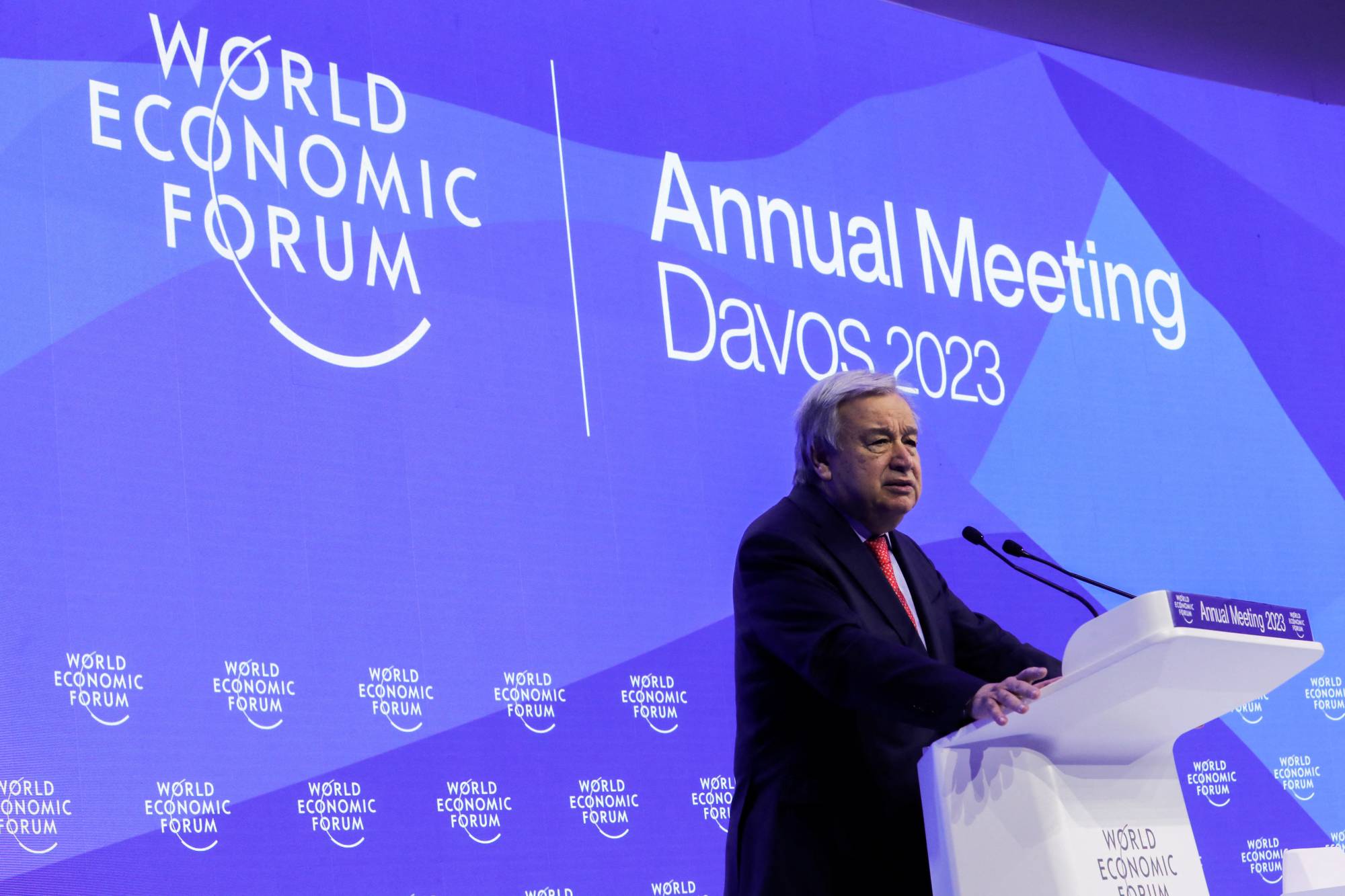
HONG KONG – At the latest annual meeting of the World Economic Forum in Davos, United Nations Secretary-General Antonio Guterres offered an unusually frank assessment of the international order’s current predicament. With the world “plagued by a perfect storm on a number of fronts,” he said, “we need cooperation, yet we face fragmentation.”
In fact, the perfect storm is better likened to a tsunami. Its components — including supply-chain disruptions, an energy crunch, a cost-of-living crisis, slowing global growth and a lurch toward climate disaster — are all at least partly consequences of the tectonic rift between China and the United States.
If what Guterres calls the “Great Fracture” plays out, the world will have “two different sets of trade rules, two dominant currencies, two internets and two conflicting strategies on artificial intelligence.” The costs would be tremendous. World gross domestic product would shrink by 1.5%, or more than $1.4 trillion in annual terms; prices would rise virtually across the board; and the delivery of global public goods would be severely diminished.
It is not difficult to understand why. Since the end of World War II, the world has been reaping unprecedented peace dividends. With the U.S. overseeing a relatively stable rules-based world order, globalization took off, enabling Europe’s postwar recovery in the 1950s and 1960s, the East Asian miracle in the 1970s and 1980s, Central and Eastern Europe’s development in the 1990s and 2010s and China’s precipitous economic rise.
While this transformation was enabled by U.S. global leadership, it also gradually diluted American hegemony, as other countries rose to prominence. This dynamic helps to explain the backlash in the U.S. against globalization and the countries that have benefited from it. Americans who felt left behind romanticized the era of U.S.-centered unipolarity and blamed “revisionist” rising powers — especially China — for supposedly eroding their prosperity. This set the stage for the Great Fracture.
KEYWORDS
In a time of both misinformation and too much information, quality journalism is more crucial than ever.
By subscribing, you can help us get the story right.
With your current subscription plan you can comment on stories. However, before writing your first comment, please create a display name in the Profile section of your subscriber account page.