


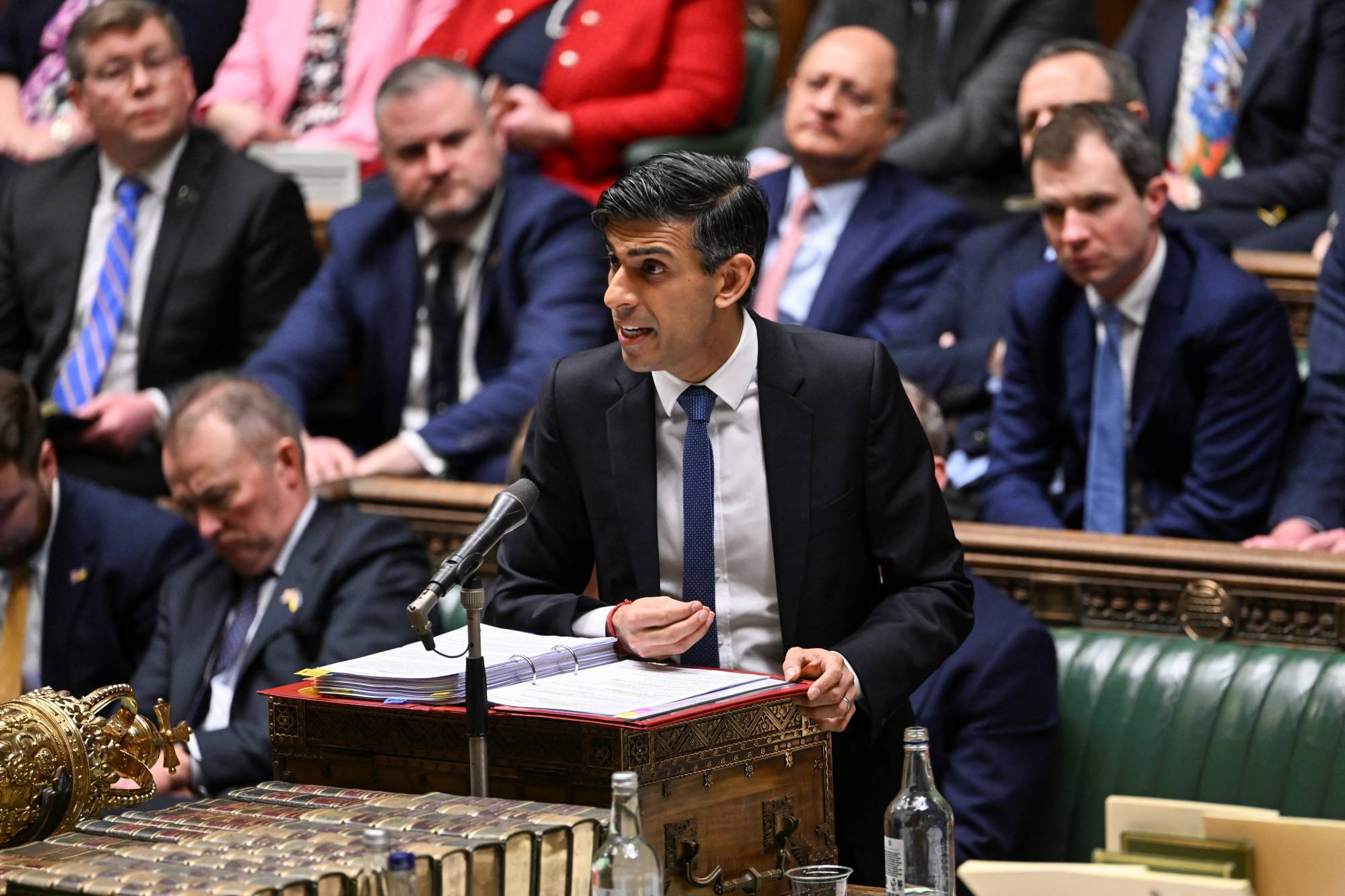
U.K. Prime Minister Rishi Sunak has occasionally been criticized for an approach to government that is more management consultant than political visionary.
But even his detractors acknowledge that he’s brought a level of professionalism to 10 Downing St. missing from his predecessors, Boris Johnson and Liz Truss. And yet it only takes one major misstep for a reputation of competence to unravel.
With the government’s bill to scrap thousands of European Union laws — debated in the House of Lords early this week and sent for committee review on Feb. 23 — Sunak looks set to sacrifice that hard-earned reputation at the altar of hard-line Brexit ideology.
Championed by former Business Secretary Jacob Rees-Mogg, the Retained EU Law (Revocation and Reform) Bill, to give its full name, introduces a cliff edge (how retro, you might think) at the end of this year. It’s not just direct EU legislation that would disappear, but acres of “subordinate legislation” — British laws passed over some four decades to implement various obligations as an EU member — will also go pouf. Ministers can extend that cliff edge, but only up to June 23, 2026 (yes, the 10-year anniversary of the Brexit referendum). If passed, it’s hard to overstate the potential disruption for businesses, workers and entire sectors of the economy.
There’s nothing wrong with the principle of amending or revoking EU laws or, indeed, cutting red tape. Those laws were incorporated into the U.K. rule book to prevent legal chaos after the U.K. left the EU with the idea that over time the U.K. would revisit them as needed, following proper parliamentary debate and scrutiny.
KEYWORDS
In a time of both misinformation and too much information, quality journalism is more crucial than ever.
By subscribing, you can help us get the story right.
With your current subscription plan you can comment on stories. However, before writing your first comment, please create a display name in the Profile section of your subscriber account page.