


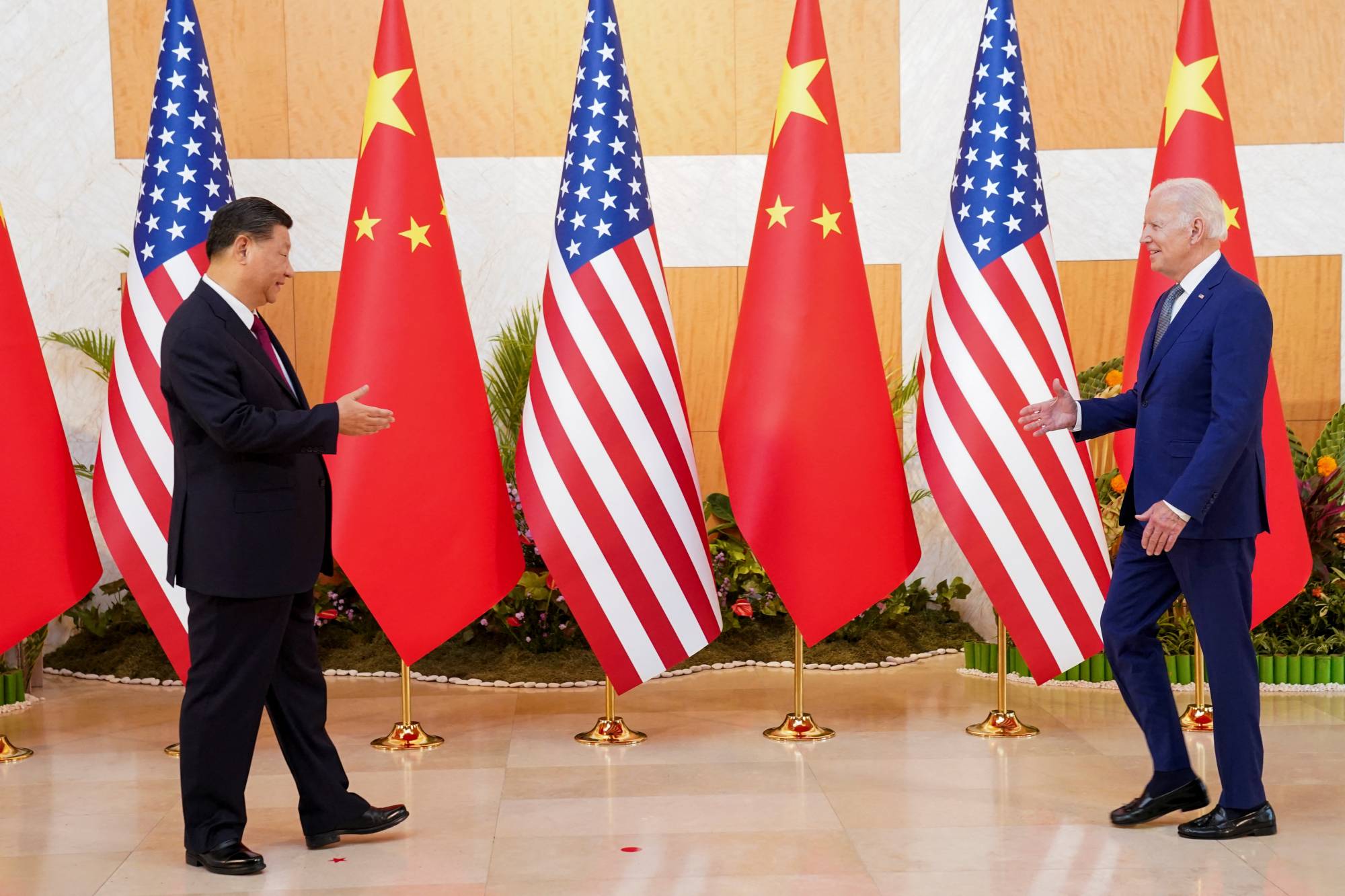
For all the uncertainties in the debate about decoupling China and Western economies — and there are far more questions than answers — everyone agrees on one thing: It will be expensive.
While true, that simple fact doesn’t answer the one truly central question: Is it worth it?
That second question invokes the critical distinction between the price of something and its value. Decoupling will create losses — as economists define them — but there is growing conviction that something far more valuable, yet far less calculable, will be gained as a result: security.
Talk of decoupling is everywhere. It began with former President Donald Trump’s trade war against China and has since spread — fueled by the COVID-19 pandemic and intensifying geopolitical competition — to encompass virtually all facets of engagement between the U.S. and China and increasingly between the later and advanced industrialized nations.
Initial across-the-board cuts in U.S.-China trade gave way to an approach that zeroed in on high-technology goods to protect strategic assets. Governments limited procurement to trusted vendors that usually reflect national origins. This creates often incompatible stacks that lock in technologies and their standards, limiting economies of scale and raising prices.
KEYWORDS
In a time of both misinformation and too much information, quality journalism is more crucial than ever.
By subscribing, you can help us get the story right.
With your current subscription plan you can comment on stories. However, before writing your first comment, please create a display name in the Profile section of your subscriber account page.