


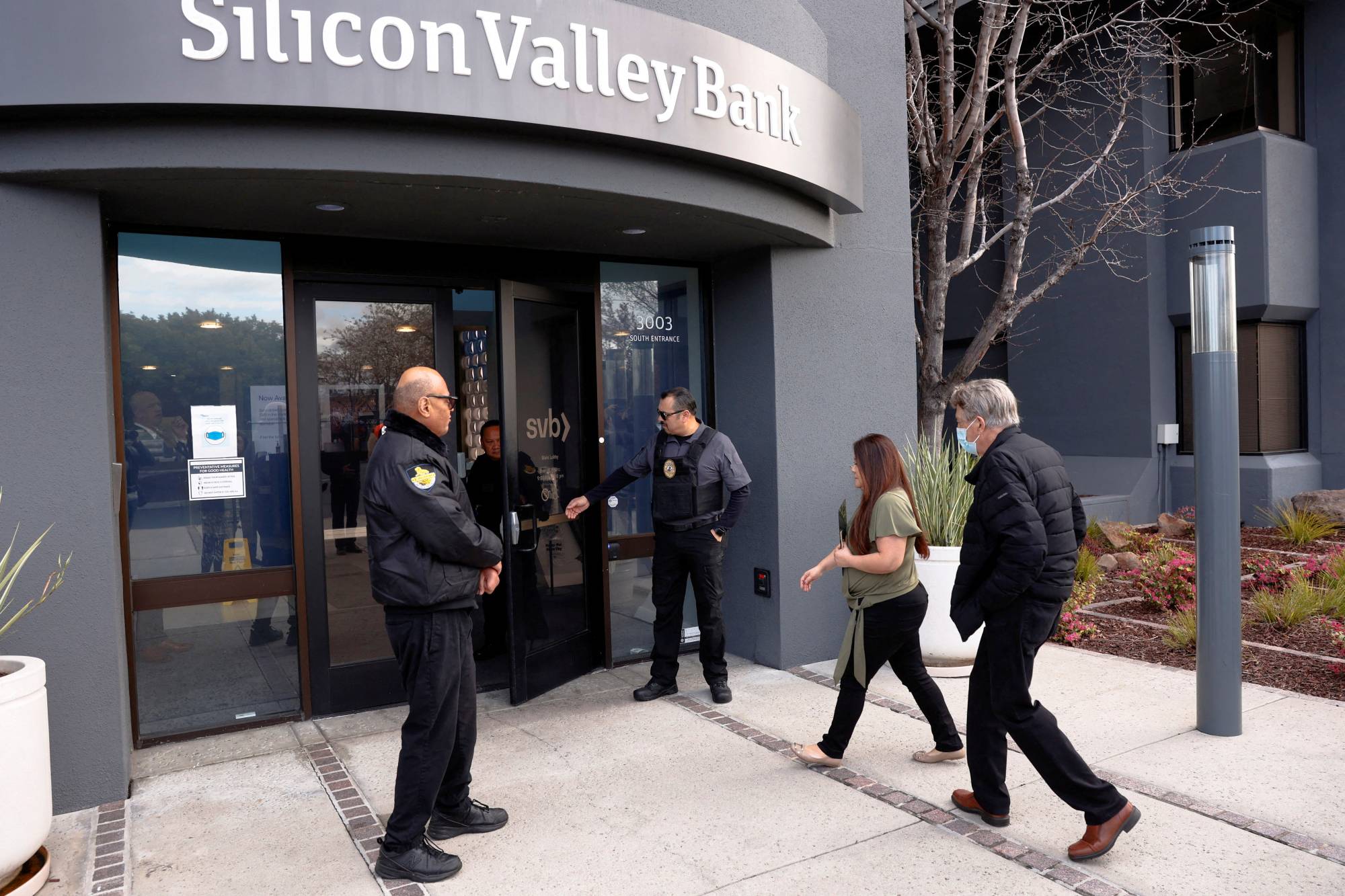
I confess, my first reaction to news of the problems at Silicon Valley Bank was a smirk.
It was hard not to relish the sight of tech libertarians, the very people who insist that regulations are a deadweight on innovation, demanding government intervention to save their bank. Once again, devout capitalists were insisting on the privatization of profits and the socialization of losses.
My schadenfreude was soon tempered by the realization that SVB was a special bank and there are legitimate reasons — a fair number of them associated with national security — to jump in and save it, or at least its customers.
The first and most compelling reason is that SVB was the go-to financial institution for the legions of startups that populate Silicon Valley. Once, those funds might have come from the government: No longer. The story of innovation after the Cold War is the migration of that spending from the public to the private sector. In 1964, the U.S. government accounted for 66.8% of total national R&D expenditures, while business provided 30.8%. By 2020, the federal government share had plunged to 19.5%, but business picked up the slack swelling to 73.1%.
The U.S. government is cognizant of that transition and has worked to prod innovators to address its defense and security concerns. The Pentagon Defense Advanced Research Projects Agency, or DARPA, the legendary agency associated with the leading edge of tech innovation, has become more aggressive in publicizing its needs to alert entrepreneurs of ways to focus their energies.
KEYWORDS
In a time of both misinformation and too much information, quality journalism is more crucial than ever.
By subscribing, you can help us get the story right.
With your current subscription plan you can comment on stories. However, before writing your first comment, please create a display name in the Profile section of your subscriber account page.