


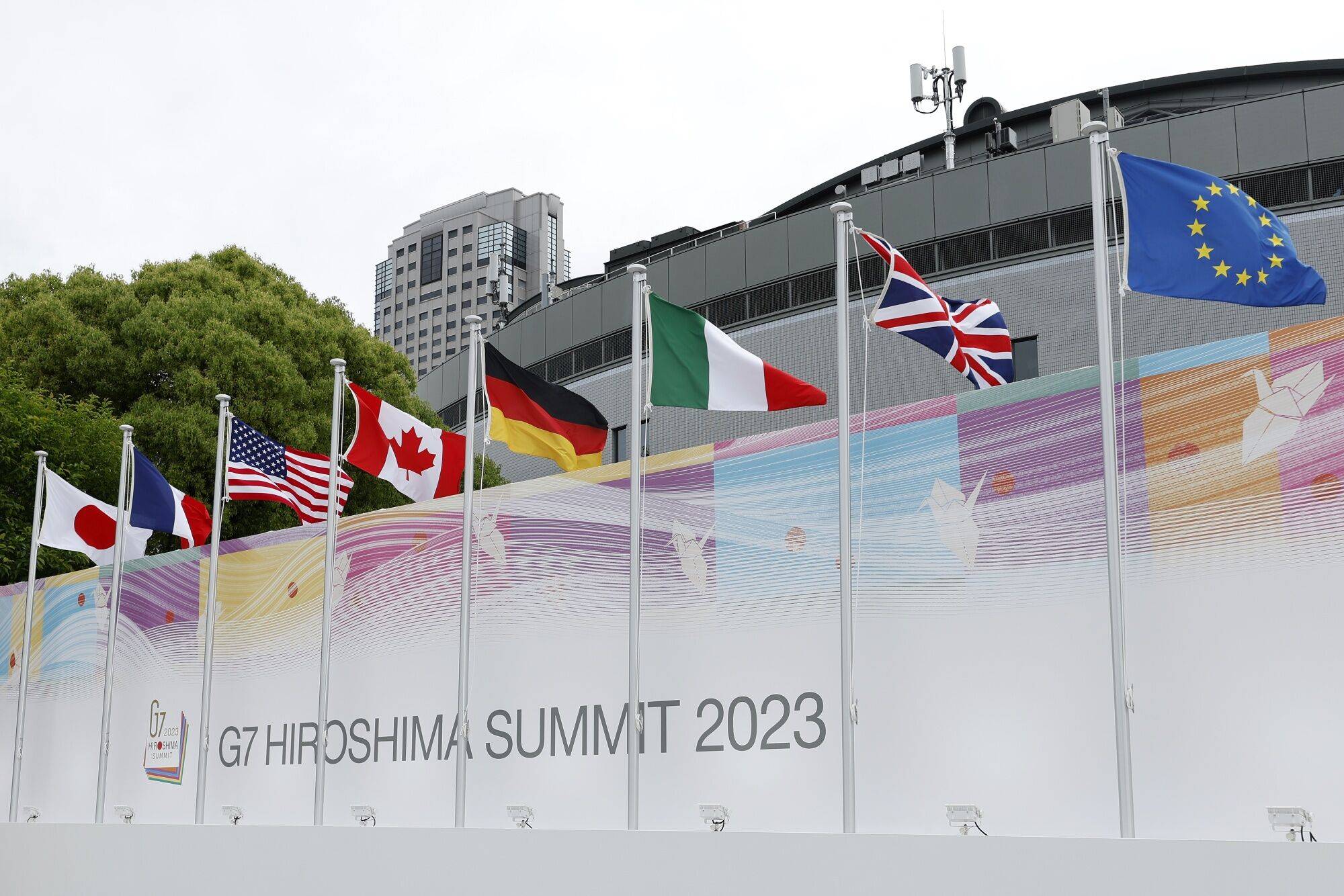
Prime Minister Fumio Kishida is hosting the annual summit of Group of Seven leading industrial nations over the next several days in Hiroshima.
Kishida’s chairmanship comes at a crucial time for the group and the world. The G7, once derided as a photo-op for leaders of a global order whose time has passed, has assumed new vigor and relevance in recent years. This is, as Kishida said upon his departure for Hiroshima on Thursday, “a historic crossroads.” With leadership and follow-up, the group could again serve as a venue to coordinate action on critical issues. It is not clear what other mechanism could serve that purpose today.
When formed 50 years ago, the G7 countries represented nearly two-thirds of global wealth. Today, they account for about 44% of the global economy.
Its status as international economic manager had been eclipsed by the Group of 20, formed in the wake of the Global Financial Crisis in 2007-08. The G7 has a whiff of nostalgia to it — the leading countries of the Cold War era gathering to show the world (and themselves) that they still set global policy.
That assignment and those ambitions have assumed new urgency since the invasion of Ukraine. The G7 has become the venue where the forces that back the existing global order convene to plan coordinated action. Prime Minister Kishida has repeatedly declared that Russia’s aggression against Ukraine is a matter of concern for the entire world and a challenge to the rules and principles of the entire international community. It is why he has called the meeting “the most important in Japan’s history.” It is also why U.S. President Joe Biden is attending the summit despite canceling the second half of his trip because of domestic political issues.
KEYWORDS
In a time of both misinformation and too much information, quality journalism is more crucial than ever.
By subscribing, you can help us get the story right.
With your current subscription plan you can comment on stories. However, before writing your first comment, please create a display name in the Profile section of your subscriber account page.