


Here’s something easy to forget but inspiring to recall: Even today, there is a very special place where Russians, Americans and others cooperate professionally — and harmoniously — despite Russia’s attack on Ukraine and the bitter confrontation between the Kremlin and the West.
That place is not the United Nations Security Council, which Russia chaired in April and cynically abused as a platform for disseminating lies and propaganda. Nor is it any venue previously used by Russians and Americans to exchange information as part of New START, the last remaining treaty to control nuclear weapons — because Russia walked out on it recently. In fact, it’s not any place on Earth.
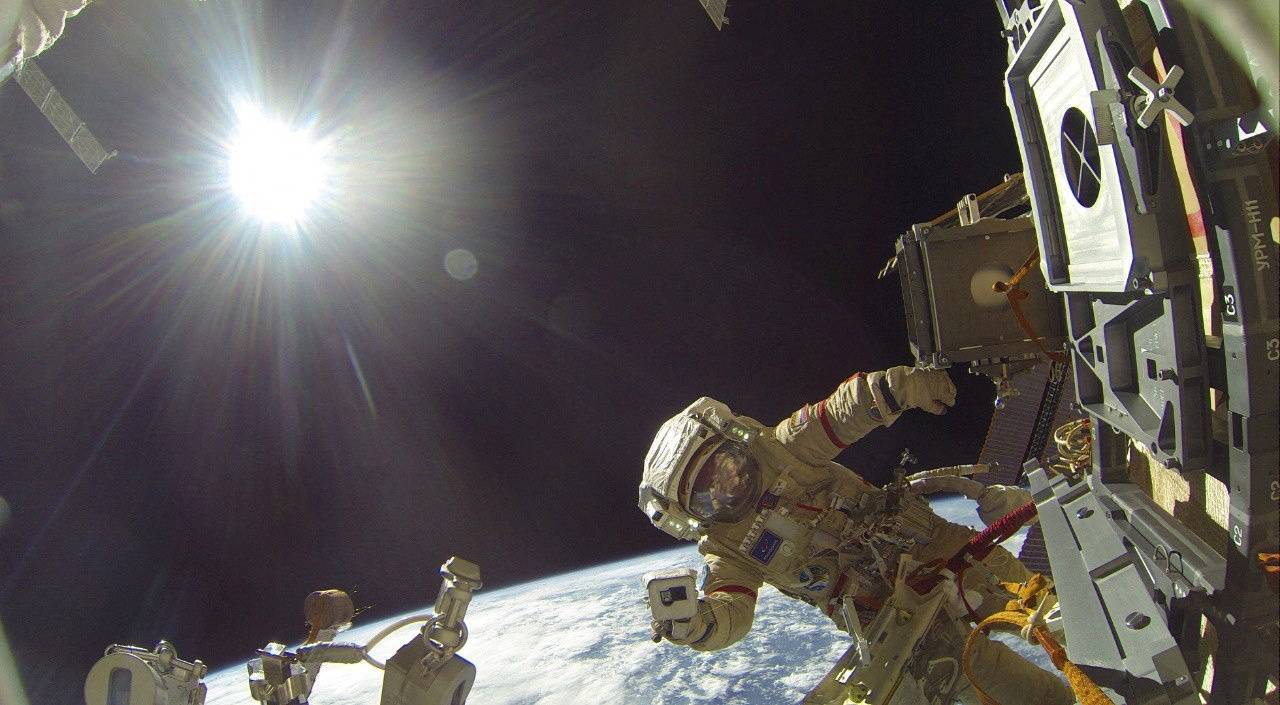
The locale is instead ethereal, literally. It’s a stunningly beautiful structure of modules and solar arrays — the size of a football field — that zips around our planet every 90 minutes and can occasionally be glimpsed from down here with the naked eye: the International Space Station.
Founded in the 1990s by the space agencies of the U.S. and Russia, the ISS subsequently embraced those of the European Union, Japan and Canada as well. It has hosted 266 visitors from 20 countries (though no Ukrainians yet). So the ISS is much more than a huge science lab in the sky. It’s also a testament to the human spirit whenever it decides to soar above earthly resentments and toward higher — dare I say celestial — destinies.
Such aspirations were indeed in the zeitgeist when the ISS was launched in 1998. The Cold War and its “space race” were thought to be over. NATO and Russia — Vladimir Putin wouldn’t become president until two years later — were pledging “mutual trust and cooperation.” It almost seemed as though the ISS symbolized the “End of History” and the the beginnings of pacific human progress.
With your current subscription plan you can comment on stories. However, before writing your first comment, please create a display name in the Profile section of your subscriber account page.