


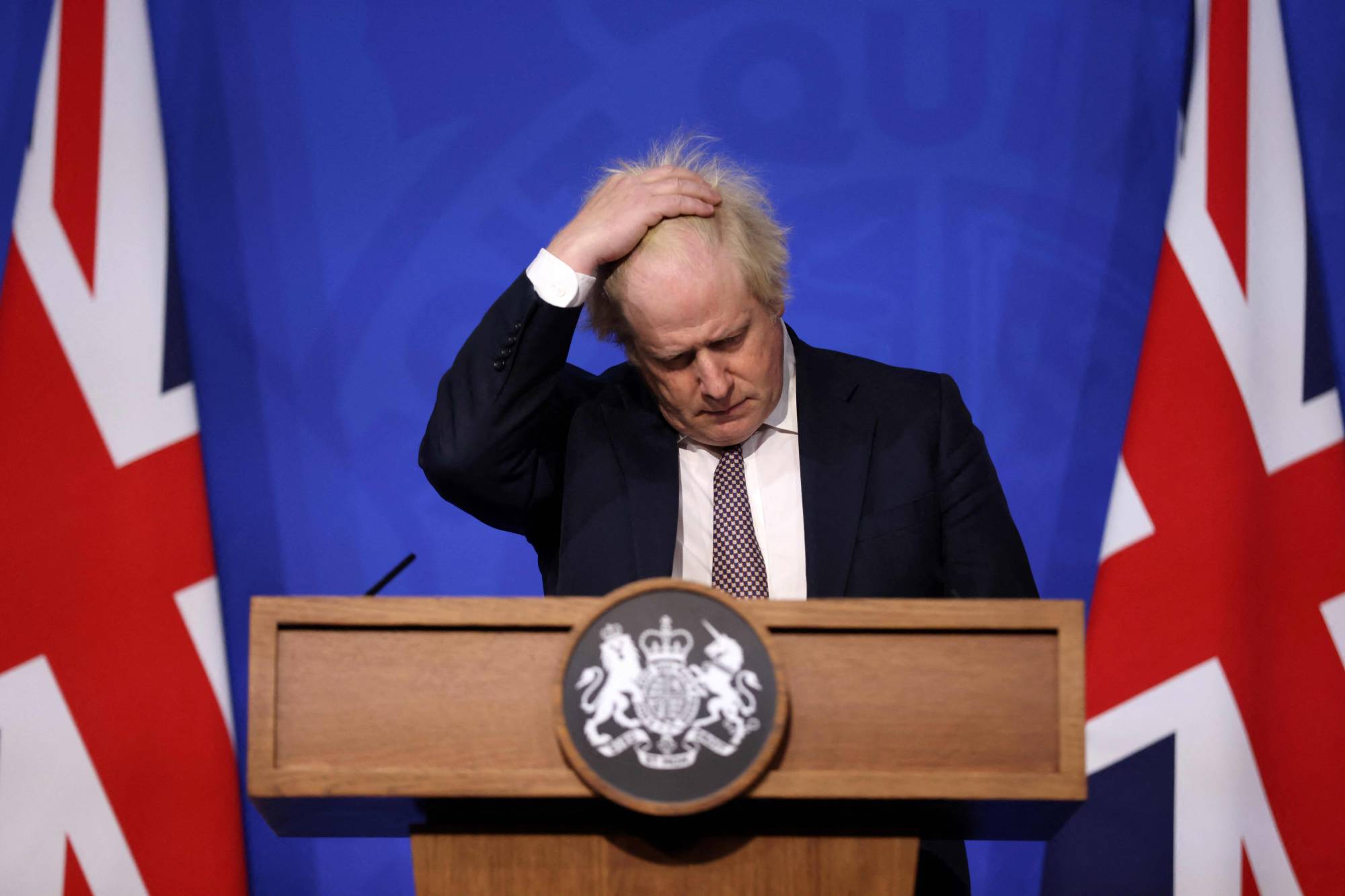
Nothing became him in life like the leaving of it, says a character from “Macbeth” of the traitor Cawdor’s acceptance of his execution. Boris Johnson may have once been commissioned to write a study of Shakespeare but he has never taken that particular line to heart. Perhaps that’s why he returned the publisher’s advance.
Earlier this month Johnson resigned abruptly as an MP rather than fight a by-election after an investigation found that he had misled Parliament over the Downing Street parties scandal. In a vituperative 1,000-word statement he condemned his accusers and then launched a frontal assault on Prime Minister Rishi Sunak for betraying Brexit and leading the Conservative Party to electoral disaster. He is unlikely to go gentle into that good night.
When a senior minister, Michael Gove, suggested that he resign as prime minister after his authority crumbled last year, Johnson fired the man on the spot. Three-time election winners like Margaret Thatcher and Tony Blair may have allowed themselves to be pushed into the departure lounge of politics by colleagues, but Boris was never going to go peaceably. Nor has he quite gone.
Matthew Goodwin, a polling expert who has charted the rise of British populism sympathetically, notes that Johnson has already brought down three prime ministers. First was David Cameron, over Brexit. Next came his successor, Theresa May, over the terms of the exit deal. Finally, Johnson scuppered his own leadership by breaking lockdown rules during the pandemic and failing to be frank about it. Now he has a fourth prime minister in his sights — Sunak.
Johnson may be sincere in some of what he wrote in his resignation statement — the self-pity is certainly authentic and has always been his Achilles heel (as I know from my days as a newspaper editor, fending off injured replies when he felt he had been traduced — or simply not loved enough). It does, however, veer toward a skewed representation of the truth — he knows that Sunak’s credentials as a Brexiteer have never been in doubt. The two just differ on what can practically be delivered to enforce the separation from the European Union.
KEYWORDS
In a time of both misinformation and too much information, quality journalism is more crucial than ever.
By subscribing, you can help us get the story right.
With your current subscription plan you can comment on stories. However, before writing your first comment, please create a display name in the Profile section of your subscriber account page.