


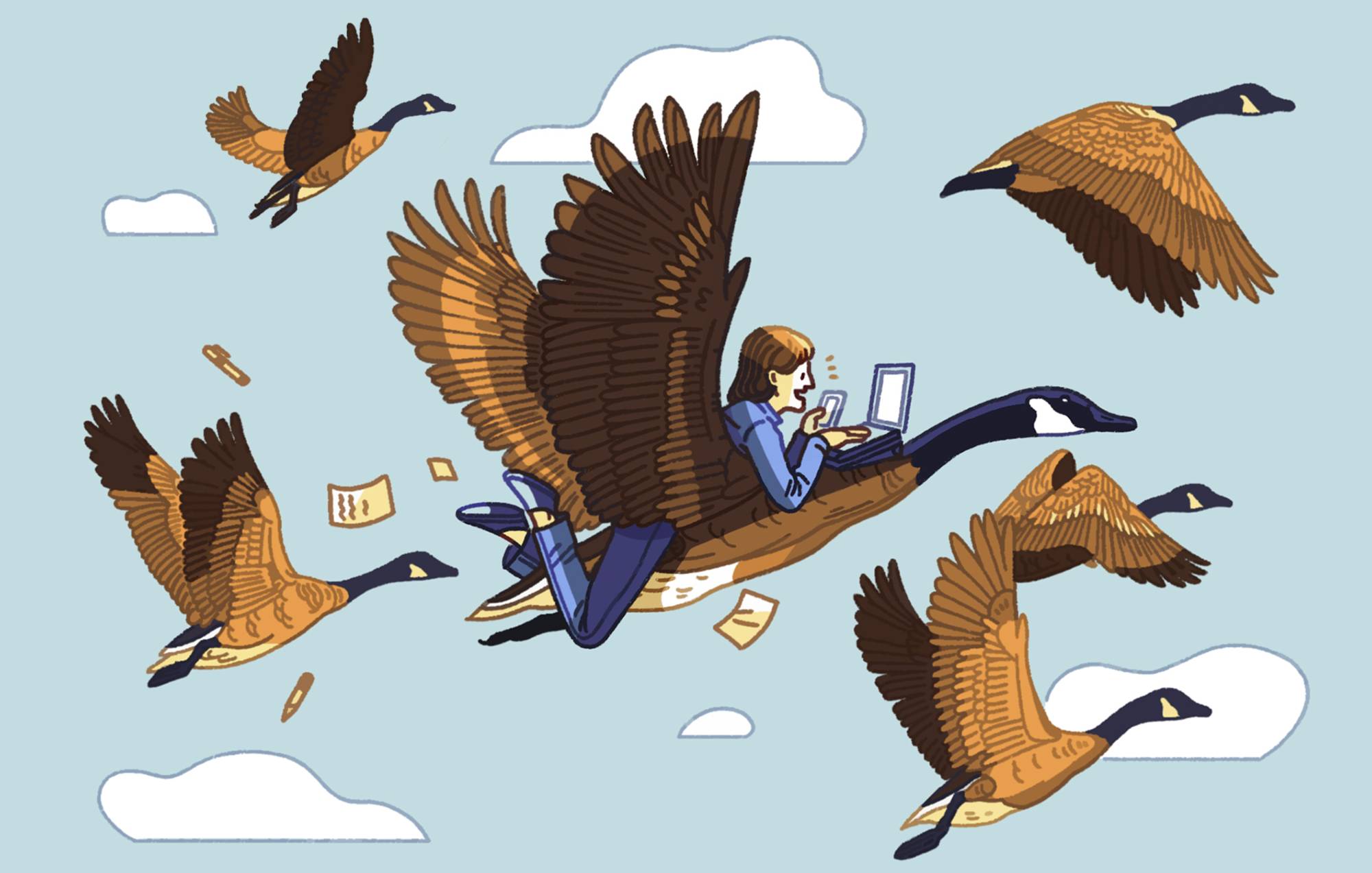
Months into the pandemic, Jess Romano moved from California to Croatia, becoming the third person to receive that country’s “digital nomad” visa when it launched in 2021. “When I worked in the office, my time off — and more important — the flexibility around where, when and how I could work was limited,” she said. “Now I can spend months or years at a time living and exploring new places while working full-time.”
Now, as coronavirus cases have fallen and working patterns are being reestablished, many companies are acknowledging the seismic shifts in the workplace and giving their employees increased flexibility about where they work in both the long and short term.
Kayak, the travel search engine, embraced remote work early in the pandemic, letting its staff set up anywhere the company has a legal entity, which includes 25 countries around the world, and counting. “If we have a legal entity somewhere, we can make payroll, pay taxes, and offer health care. They would just need the appropriate visa to work there,” said Steve Hafner, a co-founder and CEO.
“We used to always compete for talent on the basis of how awesome our offices were to work,” he said. “Now we compete on a totally different dimension, which is flexibility.”
Companies such as Spotify, Twitter and Airbnb have also adopted work-from-anywhere policies. In a report released in June, Gartner, a technological research and consulting firm based in Stamford, Connecticut, found that by the end of 2021, 51% of what it calls knowledge workers worldwide are expected to be working remotely, more than double the number from 2019.
KEYWORDS

In a time of both misinformation and too much information, quality journalism is more crucial than ever.
By subscribing, you can help us get the story right.
With your current subscription plan you can comment on stories. However, before writing your first comment, please create a display name in the Profile section of your subscriber account page.