


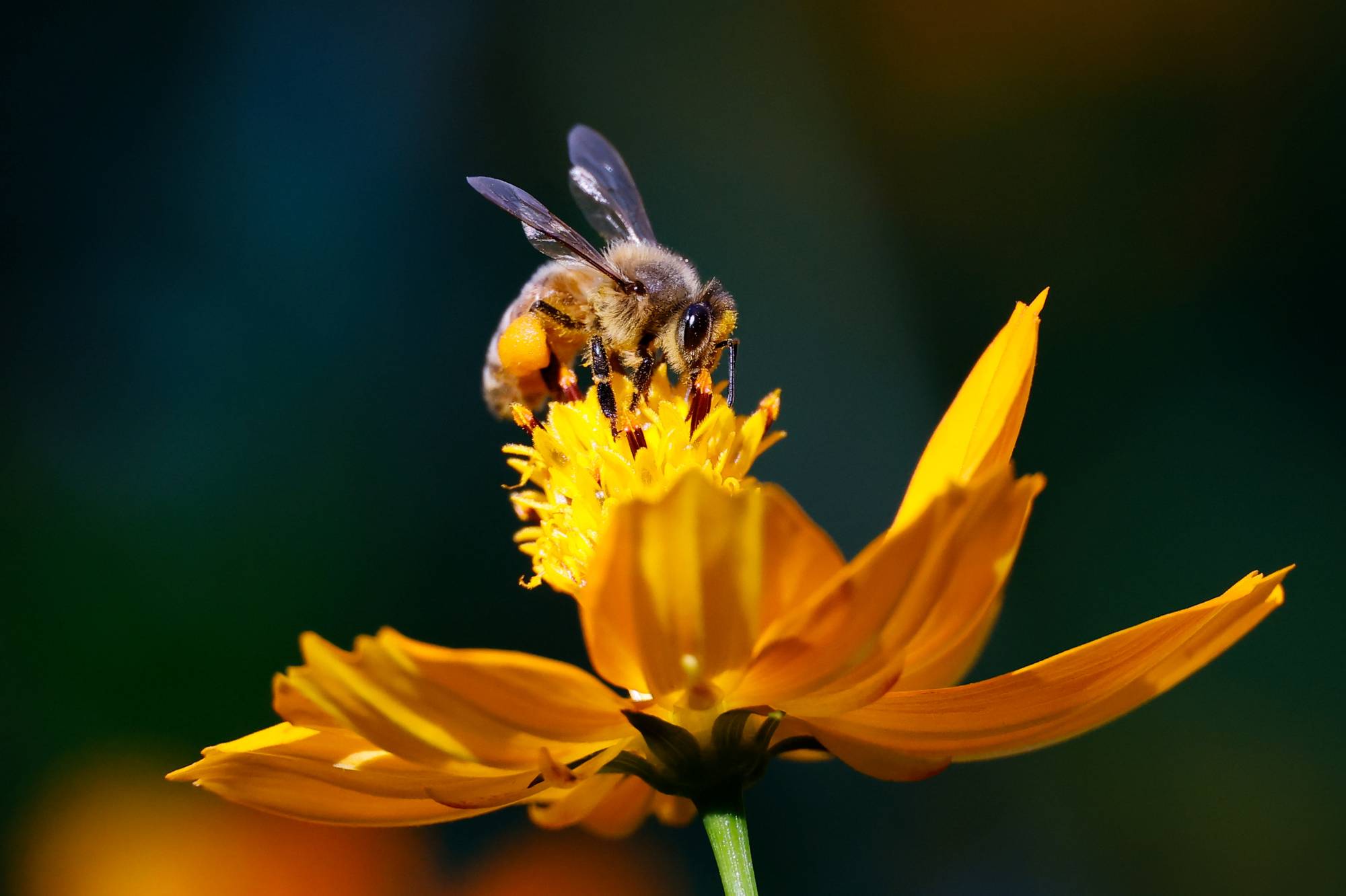
When honeybees check into the Beewise “five-star hotel,” they don’t want to check out.
A robotic arm attends to their every need. Hungry, sick or hot? Artificial intelligence software tells the robot to administer nutrients or antibiotics, to harvest honey or crank up the AC inside the high-tech hive. The intensive care routine is designed to maximize the bees’ chance of survival and success against incredible odds, so they can continue to pollinate billions of acres of crops each year despite an overheating planet.
For decades, these crucial insects, which pollinate more than 75% of all fruits, vegetables and nuts cultivated worldwide, have been succumbing to severe human-caused stressors, including toxic pesticides, new diseases and increasing heat. Beewise, a four-year-old startup based in Oakland, California, offers a particularly inspiring example of how robotics and AI might radically slow and even reverse the global honeybee die-off.
It’s a technological marvel of adaptation — so why did it leave me feeling disgruntled?
Beewise is a testament to our human capacity to solve even the most intractable problems. By now we know we must adapt to climate change: shifting how and where we live, modifying how we grow food and preserving the delicate balance of the ecosystems we depend on. But all these coping measures raise another harrowing prospect: The more ingenious our adaptation tools, the more likely we are to avoid mitigating the core issues driving the crisis. We must do both.
KEYWORDS
In a time of both misinformation and too much information, quality journalism is more crucial than ever.
By subscribing, you can help us get the story right.
With your current subscription plan you can comment on stories. However, before writing your first comment, please create a display name in the Profile section of your subscriber account page.