


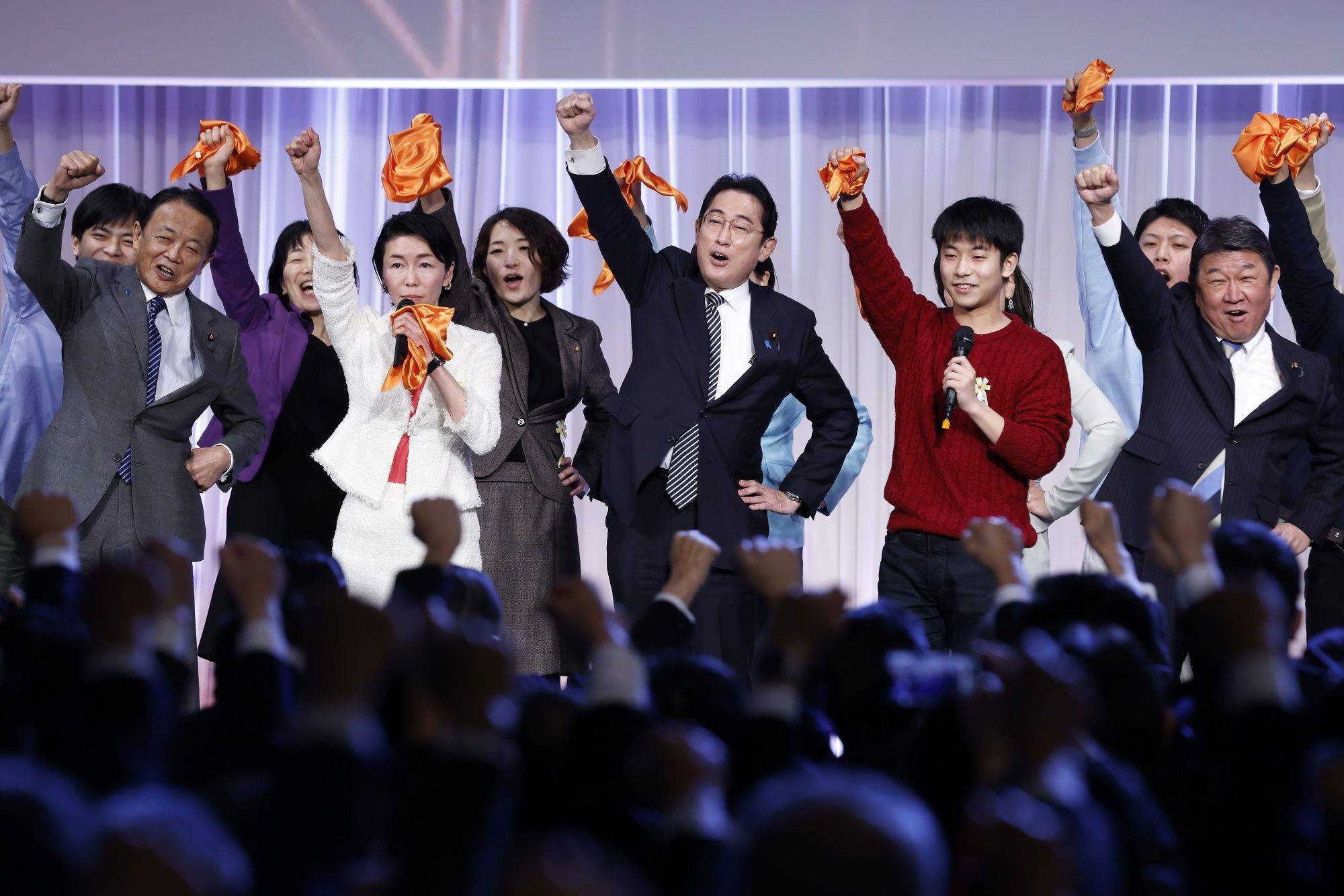
Pyeongtaek, South Korea – Prime Minister Fumio Kishida is a man of many paradoxes.
Why has someone who considers himself somewhat of a dove expended so much political capital on security policies? Why does Kishida perform decently on the world stage but poorly at home? Why has he been able to enjoy relative stability atop the government, when the same missteps and scandals he’s endured would have already toppled previous administrations?
The answers to those questions get to the core of understanding both Liberal Democratic Party politics and Kishida’s performance. They are also useful in understanding the political landscape for Japan going forward.
Fundamentally, there are two core answers to those questions. The first is that Kishida is a “system player,” meaning that he operates well within the LDP-led political system in Japan. The trouble for him now is that he is no longer in the system. He is at the top, and when one gets to that position, it is not enough to be a system player. One has to lead, manage and, at times, reshape that system.
The second is that Kishida has been relatively lucky. Of course, the assassination of former-Prime Minister Shinzo Abe presented a major challenge. This was something nobody could foresee and any LDP leader would have struggled in response to something so unpredictable and significant.
KEYWORDS
In a time of both misinformation and too much information, quality journalism is more crucial than ever.
By subscribing, you can help us get the story right.
With your current subscription plan you can comment on stories. However, before writing your first comment, please create a display name in the Profile section of your subscriber account page.